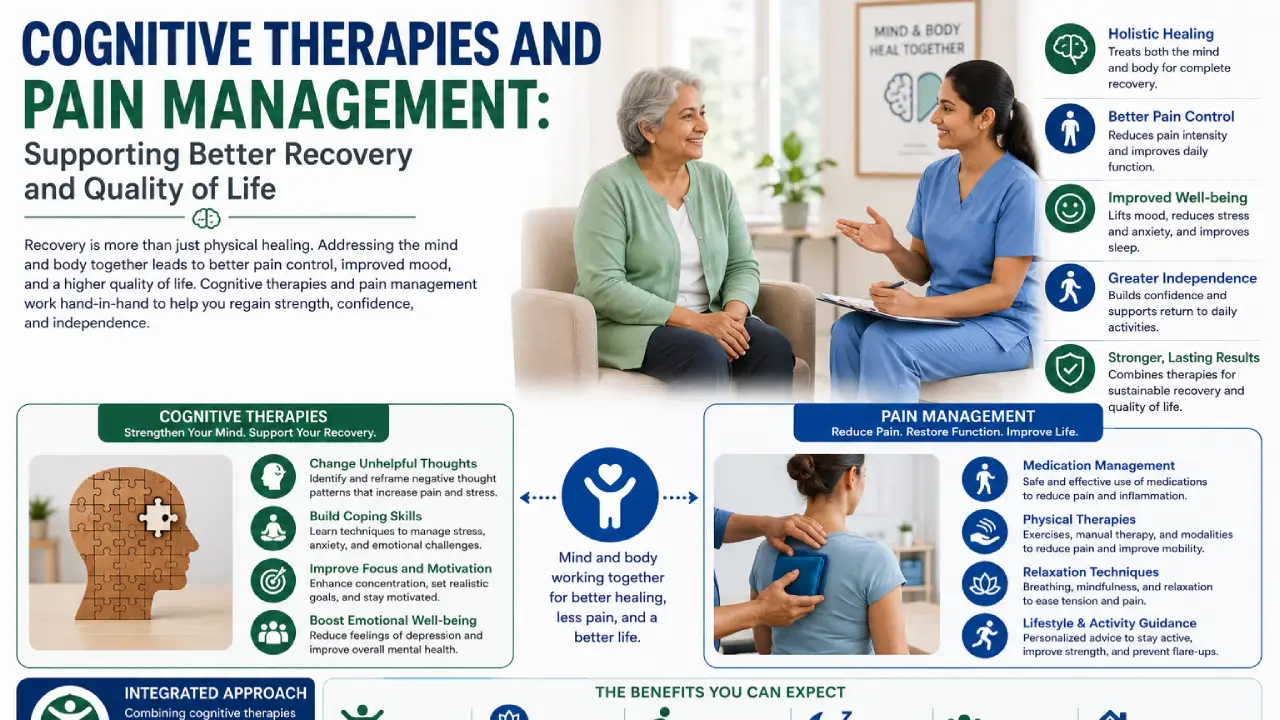
Recovery is no longer seen as a process that focuses only on medicines and hospital treatment. Across India, families are increasingly understanding that emotional wellness, mental strength, and physical comfort are equally important during recovery. Whether a person is healing after surgery, managing age-related conditions, recovering from a stroke, or dealing with chronic pain, proper support can significantly improve quality of life.
Healthcare experts today believe that recovery works best when both the body and mind are treated together. Several global rehabilitation studies suggest that patients receiving structured emotional and cognitive support often recover faster and show better long-term improvement compared to those who receive only physical treatment. Stress, anxiety, memory issues, and emotional fatigue can directly affect mobility, sleep, appetite, and confidence. This is why modern recovery care is shifting toward a more complete and patient-focused approach.
In urban cities like Bengaluru, families are actively searching for recovery programs that provide personalised medical attention along with emotional reassurance. The growing demand for Cognitive Therapies in Bangalore reflects how important mental wellness has become in rehabilitation and senior care. These therapies help patients improve concentration, communication, memory retention, emotional stability, and confidence during recovery.
The connection between pain and mental health is stronger than many people realise. Individuals dealing with constant pain often experience sleep disturbances, low energy levels, emotional stress, and social withdrawal. Over time, unmanaged discomfort can reduce independence and delay recovery progress. This is where professional recovery centres are playing a major role in improving healing experiences for patients and seniors alike.
Belvaa Senior Care has emerged as one of the care providers focusing on holistic recovery and assisted living support. Through Belvaa Senior Care, families can explore recovery-focused services that combine medical supervision, rehabilitation support, emotional wellness programs, and comfortable assisted living environments designed for long-term care and healing.
Today, Cognitive Therapies in Bangalore are widely recommended for patients recovering from neurological conditions, dementia-related challenges, trauma, surgery, and prolonged illness. Therapy sessions are designed to stimulate brain activity while encouraging emotional engagement and routine-building. Patients are often guided through memory exercises, communication activities, emotional interaction, and attention-building practices that help improve confidence and mental sharpness.
Many healthcare professionals believe emotional engagement is one of the most overlooked parts of recovery. Patients recovering in isolation often experience slower improvement because emotional stress affects participation in rehabilitation routines. On the other hand, individuals receiving guided therapy and compassionate interaction are generally more motivated to continue mobility exercises, social activities, and recovery programs.
Pain management has also become an essential part of modern rehabilitation care. Long-term discomfort after surgery, spinal procedures, fractures, or mobility-related conditions can create physical and emotional exhaustion. Families are now choosing supervised Pain Management care in Whitefield because recovery requires more than temporary medical treatment. Continuous monitoring, therapy-assisted movement, posture support, and guided rehabilitation can help patients heal in a safer and more comfortable manner.
Recovery specialists explain that controlled pain management improves mobility restoration and emotional stability. When discomfort is reduced, patients are more willing to participate in physiotherapy sessions, social interaction, and day-to-day activities. This not only improves physical strength but also restores emotional confidence during recovery.
India’s elderly population is expected to cross 190 million within the next decade, according to demographic projections. Along with this growth, conditions involving memory decline, reduced mobility, chronic pain, and neurological disorders are expected to increase significantly. Families are therefore looking for dependable healthcare environments that provide long-term rehabilitation and assisted living support under professional supervision.
The rise in demand for Cognitive Therapies in Bangalore is also connected to lifestyle changes in urban households. Many working professionals struggle to provide full-time care for aging parents or recovering family members because of busy schedules and work commitments. Structured recovery centres provide peace of mind by ensuring patients receive therapy, monitoring, emotional care, and medical attention throughout the day.
Similarly, the growing importance of Pain Management care in Whitefield highlights the changing expectations around senior wellness and rehabilitation. Families today want recovery programs that focus not only on survival but also on restoring independence, dignity, and emotional comfort. Patients recovering from orthopaedic surgeries, neurological conditions, or long hospital stays often benefit from calm and professionally managed environments where recovery routines are personalised according to their health condition.
Another important factor in successful rehabilitation is consistency. Recovery exercises, medication schedules, mobility support, emotional interaction, and nutritional care need proper coordination every day. In many cases, home environments may not provide the structured support required for long-term recovery. Professionally managed recovery centres help patients maintain discipline in therapy routines while ensuring safety and continuous observation.
Modern rehabilitation care is gradually transforming healthcare experiences across India. Recovery today is about helping people return to a better quality of life rather than simply completing treatment. Patients recovering in supportive environments often show improved emotional wellness, stronger confidence, and better long-term health outcomes.
As awareness continues to grow, more families are understanding the value of integrated rehabilitation programs that combine emotional care with physical recovery. Services involving Cognitive Therapies in Bangalore are helping patients regain mental strength and emotional balance, while structured Pain Management care in Whitefield is improving comfort and mobility during recovery. Together, these services are creating a more compassionate and effective approach to long-term healing and wellness.
What are cognitive therapies used for in rehabilitation care?
Cognitive therapies are commonly used to improve memory, attention, communication skills, emotional stability, and concentration. They are beneficial for patients recovering from stroke, neurological conditions, surgery, trauma, or age-related cognitive decline. These therapies help individuals stay mentally active and emotionally engaged during recovery.
Why is pain management important after surgery or illness?
Pain management plays a major role in improving comfort, mobility, sleep quality, and emotional well-being after surgery or illness. Proper supervision and therapy support can help patients recover safely while reducing stress and physical discomfort during rehabilitation.
Who can benefit from professional rehabilitation support?
Professional rehabilitation support is useful for seniors, post-surgical patients, individuals recovering from accidents or neurological conditions, and people experiencing mobility challenges. Structured recovery programs help improve independence, confidence, and long-term wellness.
How do recovery centres improve quality of life for seniors?
Recovery centres provide medical supervision, therapy routines, emotional support, nutritious meals, and mobility assistance in a safe environment. This helps seniors stay socially engaged, emotionally stable, and physically active while receiving personalized care.
Why are families choosing assisted recovery care today?
Many families prefer assisted recovery care because it provides continuous supervision, professional rehabilitation support, and emotional reassurance for loved ones. Structured recovery environments reduce caregiver stress while helping patients recover with dignity, safety, and comfort.