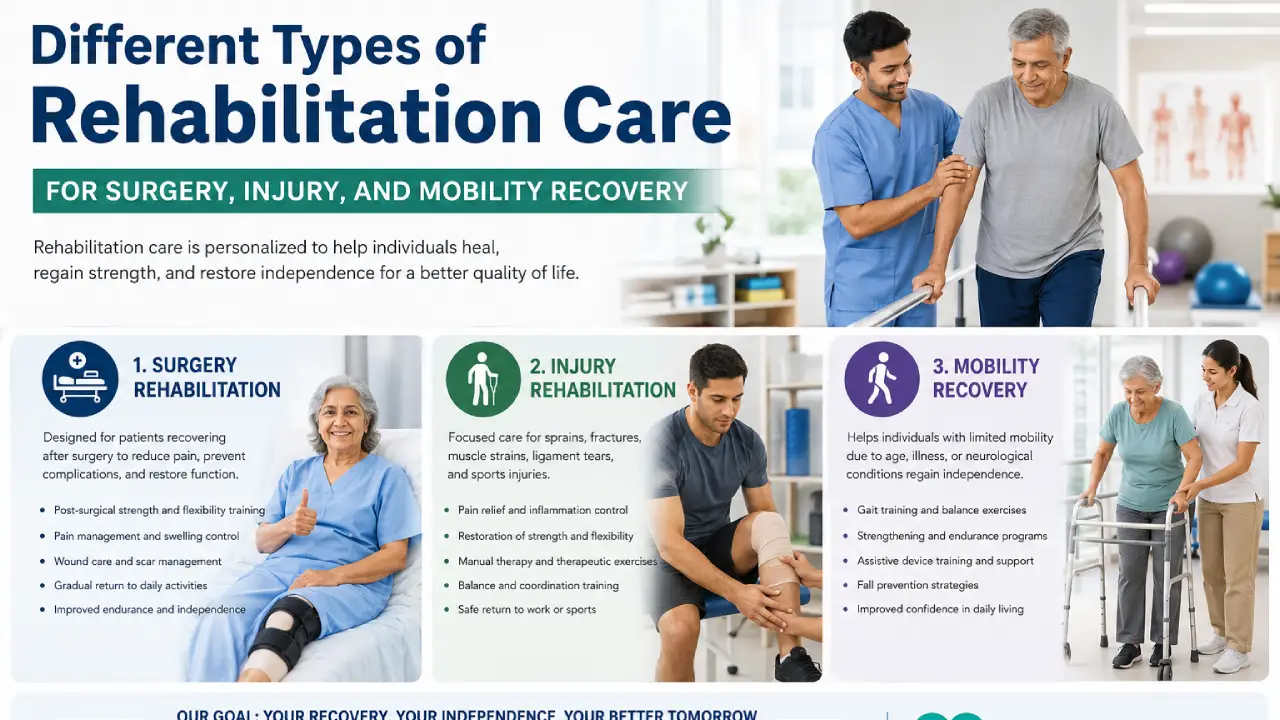
Recovery is often seen as the final stage of treatment, but healthcare experts believe it is actually the beginning of a patient’s journey back to normal life. Whether someone is recovering from a fracture, joint replacement, stroke, accident, spinal injury, or prolonged illness, proper rehabilitation plays a major role in restoring strength, movement, confidence, and emotional well-being. Across India, families are now becoming more aware that recovery requires structured medical support rather than simple rest at home.
According to healthcare reports, India performs more than 2.5 lakh knee replacement surgeries every year, while stroke cases continue to rise due to lifestyle disorders, diabetes, stress, and cardiovascular conditions. Studies also show that prolonged hospitalization can reduce muscle strength by nearly 10% to 15%, especially among elderly individuals. This is one of the reasons why professional recovery ecosystems are becoming increasingly important in urban healthcare today.
Families searching for reliable Rehabilitation Care in Bangalore are now focusing on recovery environments that combine medical supervision, mobility assistance, emotional support, physiotherapy, and day-to-day care. Recovery after surgery is not simply about healing wounds. Patients often struggle with balance, weakness, reduced stamina, and fear of movement during the first few weeks after treatment. Structured rehabilitation programs help individuals gradually regain mobility and confidence through supervised recovery routines.
Orthopedic rehabilitation is currently one of the most common forms of rehabilitation support in India. Patients recovering from hip replacements, spine procedures, fractures, sports injuries, and knee surgeries usually require continuous physiotherapy and assisted movement during the healing process. Research suggests that patients who undergo supervised rehabilitation recover mobility nearly 30% faster compared to those depending entirely on unstructured recovery at home. Rehabilitation specialists also focus on improving flexibility, posture, muscle strength, and walking stability to reduce long-term complications.
Neurological rehabilitation has also gained significant importance in recent years. Stroke recovery, Parkinson’s disease, spinal trauma, and cognitive disorders often affect movement, speech, coordination, and memory. Recovery in such situations is usually gradual and emotionally demanding. Medical experts say early rehabilitation intervention can improve independence levels and long-term quality of life for many patients. Families choosing premium elder care in Whitefield are increasingly looking for recovery spaces that offer emotional reassurance along with clinical support because neurological recovery often requires patience, consistency, and compassionate caregiving.
Another growing category is post-hospitalization recovery care. Patients recovering after ICU admissions, respiratory illnesses, infections, or surgeries frequently return home physically weak and emotionally exhausted. Doctors say prolonged bed rest can reduce physical endurance significantly, making even simple daily activities feel difficult during the first few weeks after discharge. Structured recovery support helps patients rebuild stamina safely through supervised mobility routines, nutritional guidance, medication management, and assisted rehabilitation exercises.
The growing demand for Rehabilitation Care in Bangalore also reflects how Indian families are changing their approach toward elderly wellness and recovery. Earlier, rehabilitation was often viewed only as physiotherapy sessions after surgery. Today, it is understood as a complete recovery process that includes pain management, cognitive support, mobility restoration, emotional care, and medical monitoring. Families now recognize that professional rehabilitation can reduce recovery complications while improving both physical and mental well-being.
Pain management rehabilitation is helping many seniors improve their quality of life as well. Arthritis, chronic back pain, cervical discomfort, joint stiffness, and age-related muscle degeneration are increasingly common among elderly individuals. Health studies estimate that nearly one in three seniors experiences mobility limitations due to musculoskeletal conditions. Supervised rehabilitation programs focusing on movement therapy, posture correction, strengthening exercises, and balance improvement often help reduce pain while improving independence in daily activities.
The emotional side of recovery is equally important but often overlooked. Many patients recovering from surgery or illness experience anxiety, frustration, loneliness, or fear of dependency. Medical professionals now believe emotional wellness directly influences physical healing. Patients recovering in calm and socially engaging environments often show better therapy participation and improved recovery outcomes. This growing awareness has strengthened the importance of premium elder care in Whitefield, where recovery is approached with a balance of medical attention and emotional comfort.
Facilities like Belvaa Senior Care are helping redefine recovery-focused senior care by combining structured rehabilitation support with compassionate caregiving. Instead of treating recovery as a temporary medical phase, modern rehabilitation environments now focus on helping patients regain confidence, independence, mobility, and emotional stability. Families also feel reassured knowing their loved ones are recovering in professionally supervised spaces designed around safety and comfort.
India’s elderly population is projected to reach nearly 194 million by 2031, and healthcare experts believe rehabilitation services will become one of the country’s fastest-growing healthcare segments. The increasing awareness around Rehabilitation Care in Bangalore shows that families now understand recovery requires time, patience, and professional support. Proper rehabilitation not only improves mobility but also helps individuals return to everyday life with greater confidence and dignity.
Similarly, the rising preference for premium elder care in Whitefield reflects how modern Indian families are prioritizing structured wellness and long-term recovery support for their loved ones. Recovery today is not just about physical healing. It is about helping individuals feel emotionally secure, medically supported, and socially connected throughout their journey toward better health.
What is rehabilitation care and who needs it?
Rehabilitation care supports individuals recovering from surgery, injury, stroke, illness, or hospitalization. It helps improve mobility, strength, balance, confidence, and emotional well-being through structured medical supervision and therapy support.
How does rehabilitation help after surgery?
Post-surgical rehabilitation improves movement, flexibility, muscle strength, and overall recovery speed. It also reduces the risk of falls, stiffness, delayed healing, and long-term mobility complications after orthopedic or neurological procedures.
Why is professional rehabilitation important for seniors?
Elderly individuals often recover more slowly due to age-related weakness and reduced mobility. Professional rehabilitation provides supervised recovery routines, medical monitoring, emotional support, and safer mobility assistance during healing.
What conditions usually require rehabilitation support?
Rehabilitation is commonly recommended after fractures, spine surgeries, knee replacements, stroke recovery, Parkinson’s disease, trauma injuries, prolonged hospitalization, and chronic pain-related mobility conditions.
Why are families choosing recovery-focused senior care facilities?
Families prefer professional recovery environments because they provide structured therapy, continuous medical supervision, emotional reassurance, nutrition support, and safer rehabilitation routines that may be difficult to manage entirely at home.